August 25, 2026 | 12:18
Research
International cooperation
Culture

Q: Mr Yeranyan, some time ago you posted a photograph on your Facebook page showing the evacuation of Iranian museum collections and their protection with sandbags during wartime in 2025. Is evacuating entire collections the right approach, and how should objects that are impossible or extremely difficult to move be protected?
A: Evacuating museum collections is not always the right decision. Some objects cannot be evacuated, and the evacuation itself may cause damage. During armed conflicts, heritage being evacuated may even become a target. It is essential to have a clear understanding of what should be evacuated, where, by whom and when.
The photograph I posted was intended to show that objects that are not evacuated can be conserved in situ. For example, covering them with sandbags is now a commonly used method. It is not very costly, but it is effective in protecting objects from fragments and other risks.
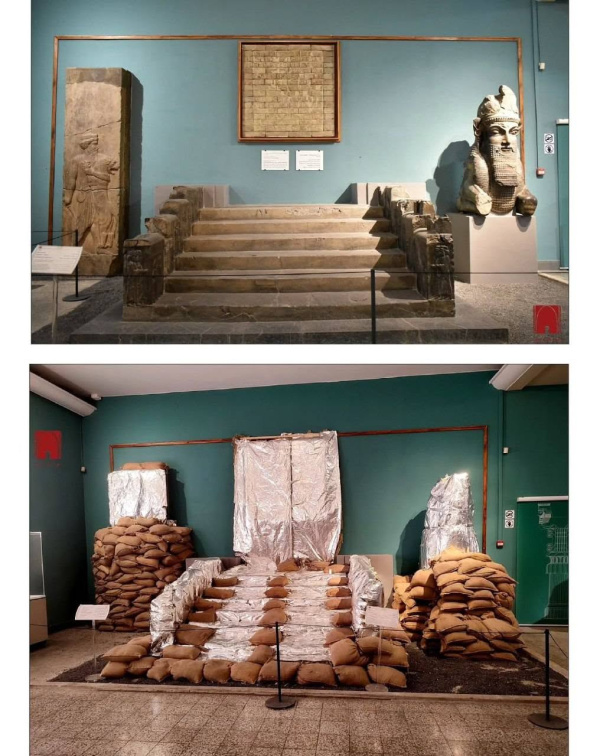
Q: Can any object be covered with sandbags?
A: This is mainly done with objects that are immovable or massive, such as stone statues or urban monuments. Sand can damage organic materials such as wood if they remain in contact for a long time, but it is better to reduce the risks of impact in this way than to leave them exposed and subject them to greater damage.
Q: Are museums in Armenia prepared for conflict scenarios and emergencies?
A: The answer is not an unequivocal "yes" or "no". There is no museum anywhere in the world that is 100% prepared. Recent experience has shown that institutions in Armenia are, for the most part, not as prepared as they need to be. However, museums are striving to become better prepared for potential risks.
When we talk about disasters, for some reason we tend to focus on conflicts, but in Armenia these represent only one part of the risks threatening heritage. There are many other risks as well.
Q: If evacuation is necessary, are there safe places in Armenia where museum collections can be stored, or is there a state evacuation plan?
A: Shelters should differ depending on the nature of the risk, whether it is an armed conflict, potential flooding or something else. Since 2020, and following the adoption of the Law on Museums, there has been an order by the Minister of Education, Science, Culture and Sport of the Republic of Armenia concerning the evacuation of museum collections in emergencies. Under that order, all museums must have designated locations with appropriate temperature and humidity conditions and security systems.
A: Do museums in Armenia cooperate with international organizations, and can they receive support from them in emergencies?
Q: Museums sometimes lack the resources and authority to reach separate arrangements, but the field has become more active over the past five years. For example, training courses have been organized with the support of ICOM Armenia, the Ministry of Education, Science, Culture and Sport, the History Museum of Armenia and other partners. There are also international programs involving specialists from Armenia.
In 2025-2026, I personally took part in a nine-month program funded by the European Union and organized by ICCROM, the International Centre for the Study of the Preservation and Restoration of Cultural Property. Part of the program was conducted remotely, while the other part consisted of practical exercises in Riga. The aim was to create a network of specialists across Europe who would share the knowledge they had acquired in their own countries and respond to disasters, thereby strengthening the protection of cultural heritage sites across the EU.

Q: Is digitization also viewed as a means of protecting cultural heritage?
A: Cultural heritage disaster risk management is divided into four main areas: prevention, preparedness, response during a disaster and post-disaster action. Digitization is considered a preventive measure.
However, by "digitization" we do not mean merely scanning collections, but creating comprehensive databases - digitizing heritage in its entirety. Behind every object there is a great deal of intangible information that must also be preserved.
Q: So, if there is a scanned version of an object together with complete information about it, would it be possible, for example, to restore the object if it were damaged?
A: It helps both with restoration and with preserving intangible information. If, for example, we have a photograph of a carpet, the question is not only what technique was used to weave it, but also who wove it, in which community and what role that object played in the community. Through digitization, even if an object is potentially lost, we can continue to preserve comprehensive information about it.
I should note that cultural heritage institutions in Armenia are still largely not digitized.
Q: You also cooperate with a foundation that works to protect cultural heritage affected by war, climate change and natural disasters. Could you tell us more about that?
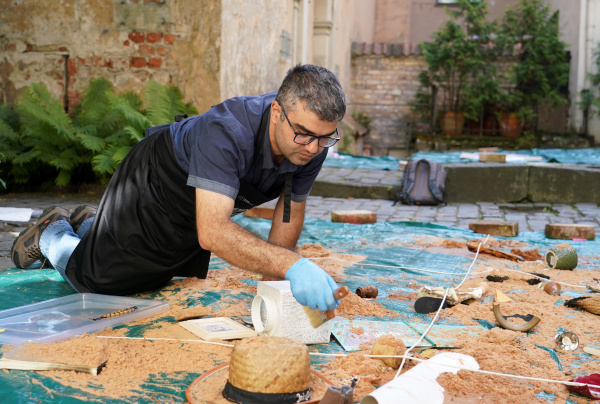
A: Yes, I cooperate with the ALIPH Foundation, which funds programs for the preservation of cultural heritage in conflict, post-conflict and crisis zones.
Together with my colleagues, I also initiated the establishment of Armenia's first cultural heritage first aid group, which has been funded by the foundation. It is a volunteer group called the Cultural Heritage First Aid Initiative.
Some people have the necessary knowledge, understand the importance of cultural heritage, are concerned about its fate and want to support its preservation, but are not institutionally affiliated, for example, with museums. A university lecturer or an employee of the Institute of Archaeology and Ethnography, whose immediate duties do not include helping museums during disasters, may still want to contribute in this area.
Once a year, we will organize training comprising theoretical lectures and practical exercises, particularly in regional museums, using real-life scenarios.
The initiative aims to prepare people who, in the event of a disaster such as a flood or fire, will be able to respond quickly and effectively using the necessary knowledge, gear and equipment. More than 30 volunteers have already applied, including people from abroad. The volunteers include lecturers, tour guides and researchers.
Q: You are continuing your research on this topic. What are your plans for the future?
A: YSU has applied to the Higher Education and Science Committee of the Ministry of Education, Science, Culture and Sport of the Republic of Armenia to establish a Remote Laboratory for Cultural Heritage and Disaster Research at the university. The application is currently under consideration. The laboratory will have two areas of focus. The first will be the creation of a database of disasters that have damaged cultural heritage in Armenia, based on archaeological and written sources. The second will be the study of the current preparedness level of contemporary heritage institutions, cross-referenced with the disaster map.
We do not have a comprehensive digital map of Armenia's heritage sites that includes all of the country's monuments, museums, libraries and archives. We want to create such a map and combine it with maps of disasters and potential risks, such as river flooding and fires.
If we have such a map, we will be able to organize our actions more effectively together with the relevant authorities.