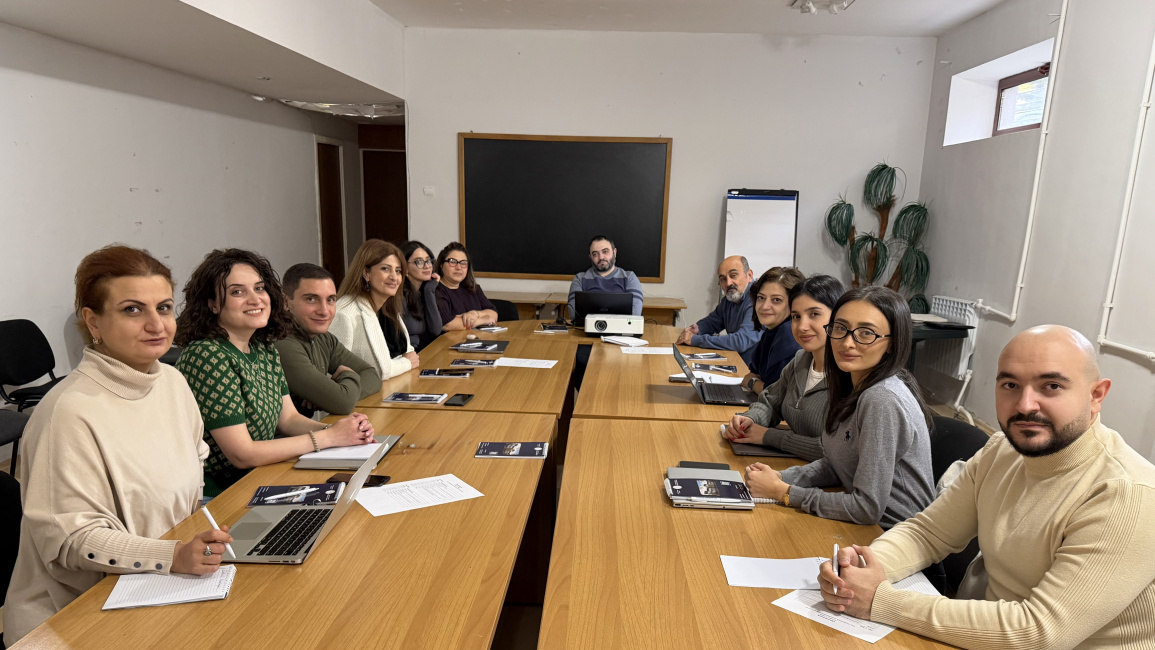
A series of seminars titled "Artificial Intelligence in Higher Education and Academic Work" was held on November 7-8 at YSU's Tsaghkadzor Training and Production Base, at the initiative of the Faculty of History. The seminars were designed for the faculty's academic staff, PhD students, and administrative staff. The sessions were led by Smbat Hakobyan, a researcher in the Cultural Anthropology Department at the Institute of Archaeology and Ethnography.
The two-day program aimed to familiarize participants with the distinctive features of generative artificial intelligence, its potential applications in university and academic work, and the benefits and challenges of using AI in higher education, as well as possible ways to address them.
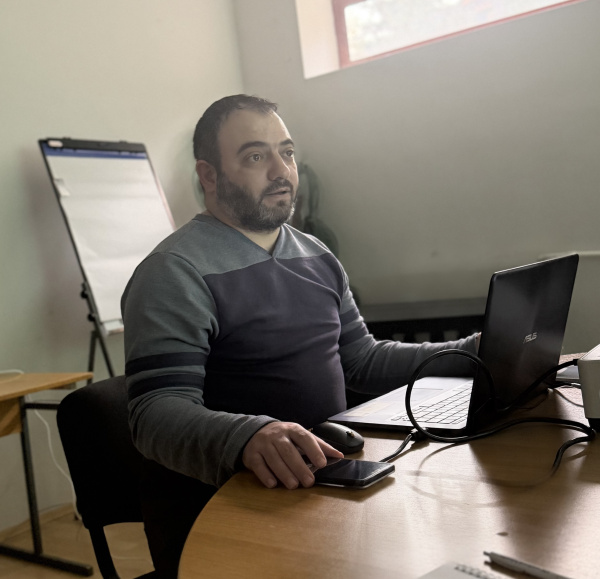
The speaker covered fundamental topics related to artificial intelligence, generative AI, machine learning, and large language models (LLMs). He discussed the changes brought about by AI in modern professional and workplace environments, its potential and limitations, including so-called "hallucinations," and the importance of human expert oversight when using AI tools.
The impact of artificial intelligence on higher education and research was also discussed. Smbat Hakobyan presented the opportunities, changes, issues, and challenges emerging in educational and academic environments amid the development of new technologies.
The seminars also addressed the use of AI tools in teaching and the development of educational materials. In particular, participants explored how these tools can help prepare course syllabi, lectures, seminars, case studies, discussion questions, exercises, and slide presentations, as well as improve the teaching process.
Another key topic was the use of artificial intelligence in scientific research and academic writing. Discussions focused on the potential use of AI tools in humanities research, the processing of qualitative data, improving the efficiency of research processes, and preparing academic texts.
Theoretical discussions were complemented by practical activities, allowing participants to put their newly acquired knowledge into practice. During the workshops, participants learned the principles of effective prompt engineering, including how to provide AI tools with the necessary context, define roles and tasks, specify the desired output format, and tailor tools to particular assignments.
The seminars concluded with discussions of ethical issues related to the use of artificial intelligence, including privacy, copyright, data security, potential biases, transparency, and responsible AI use.
Seminars of this kind are important for professional development, familiarizing participants with the capabilities of emerging technologies and promoting their effective application in educational and research processes. Such initiatives are ongoing at the Faculty of History and are aimed at expanding the knowledge and professional skills of faculty members, researchers, students, and staff.