April 14, 2025 | 11:11
Research
Publications and scientific journals
Competitions
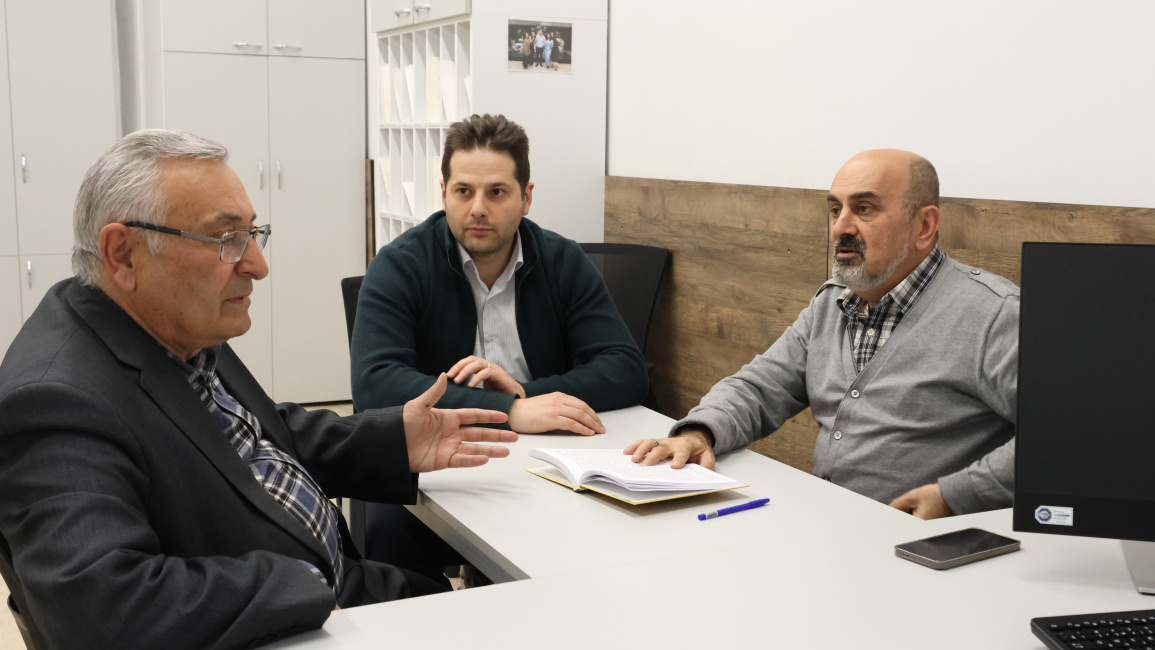
The three-year research project was also presented at an international conference in 2024 and compiled in a collection of scholarly articles on the topic. The research and publication were made possible through a grant provided by the Higher Education and Science Committee of the Armenian Ministry of Education, Science, Culture and Sports. Another article is planned for publication in a highly ranked international academic journal in the near future.
The authors of the various articles in the collection have analyzed how periodicals of the time—including Mshak (Tbilisi), Haraj (Yerevan), Zhoghovurdi Dzayny–Zhamanak (Constantinople), Arev (Alexandria), and Hayrenik (Boston)—covered the 1920 Turkish-Armenian war and related events. Topics include reactions to Turkish-Armenian border clashes, reports of the Kemalist Turkish preparations to attack Armenia, and responses to the implementation of the Kemalist plan for the Armenian Genocide.
In the interview with us, Dean of the Faculty of History Mkhitar Gabrielyan provided insights on the topic.
– Mr. Gabrielyan, why was this particular topic chosen, and how does it resonate with current realities?
– The press played a crucial role in shaping Armenian identity and national consciousness in the late 19th and early 20th centuries, both in Armenia and the diaspora. In the absence of television and other modern media, newspapers were among the primary resources for spreading ideas and shaping public opinion.
The study examines how Armenians in Soviet Armenia, the United States, and other countries received information about the 1920 Turkish-Armenian war and its consequences, and how that information shaped their perceptions of the situation, their neighbors, and themselves.
Examining the Armenian press of the 1920s shows that many perceptions remain unchanged. Both Armenians' perceptions of Turks and vice versa have largely remained unchanged. Much like in the past, today, amid ongoing efforts to normalize Armenian-Turkish relations, a significant portion of Armenian society continues to view Turkey as an enemy and a perpetrator of genocide, believing that normalization—under the current terms—will result in Armenia once again being the losing side.
On the other hand, there remains a segment of society, as there was in the 1920s, that advocates for turning the page on the past and fostering at least tolerable relations with our neighbors. Similar patterns can also be observed in Armenian-Russian relations. In 1920, for example, the Armenian press expressed strong disapproval of the Russo-Turkish alliance, which was seen as having sacrificed Armenian interests. Today, similar criticisms of Russia are being voiced, particularly in the context of the 44-day war and the unresolved Artsakh conflict.
– You mentioned that today, alongside efforts to normalize Armenian-Turkish relations, a significant portion of society continues to perceive Turkey as an enemy and a perpetrator of genocide. Could it be that Turkey's denial of the genocide is what drives such perceptions within Armenian society? What conclusion have you come to on this matter?
– We examined the Armenian public's perceptions and interpretations, aiming to understand the logic behind the narratives presented in the press. Through a detailed analysis of a vast array of materials, we have been able to sketch a broad picture of how Armenians viewed themselves in 1920—how the media represented us, who we were, who our neighbors were, and what kind of relations we were thought to have with them.
The perspectives presented in the press regarding the Republic of Armenia are also of significant importance. Notably, these perceptions shifted in parallel with the successes or failures recorded by the state and its authorities. For instance, until mid-1920, most newspapers portrayed Armenia as a relatively successful and competitive country. From a civilizational standpoint, they depicted Armenians and Turks—as well as Armenians and the Caucasian Tatars (who later became known as Azerbaijanis)—as belonging to entirely different planes. According to the majority of the sources, Armenians, along with Georgians and certain other communities in the region, were seen as representatives of civilization, while the labels applied to Turks and Tatars were mostly negative, associated with massacres, killings, plunder, and other such realities.
We have sought to demonstrate that the explanations and interpretations offered by the press had a tangible impact on our collective identity. The direct influence of the media on our perceptions and thinking has been substantial. For example, following Armenia's defeat in the 1920 war, there were publications asserting that the Turk had long harbored the goal—spanning decades and even centuries—of destroying the Armenian people and all things Armenian. In later publications, however, the causes of our defeat were attributed to the disintegration of the army, Bolshevik propaganda, and a morally and psychologically complex atmosphere. Naturally, the reality is a combination of all these factors.
– Could you please provide examples from the Armenian press of the 1920s that reflected reactions to Armenian-Turkish relations and the war?
– Prior to the outbreak of the war in 1920 and the ensuing brutal events, the Armenian press exhibited a certain degree of excessive optimism and overconfidence. For example, the Zhamanak newspaper, published in Constantinople, reported that the Armenian army was sufficiently equipped with military supplies. It was even noted that Armenian aircraft had struck a decisive blow near Kars, causing attacking bands to retreat in disarray. However, not long after this publication, Kars fell—a development that proved to be of fateful significance for the First Republic of Armenia.
At the same time, the Armenian press provided revealing insights into perceptions of ourselves and our neighbors, including how Turks and Russians were viewed and how the government was criticized. For example, in the final phase of the war, one article appeared under the headline 'Հայկական բանակի բարոյականը ընկած է, մինչ ընդհակառակը՝ թուրքերն ավելի կարգապահ են և լավ պարենավորված', meaning the morale of the Armenian army had collapsed, while the Turks, on the contrary, were more disciplined and better supplied.
Over time, the rhetoric toward the Turks in the press also evolved. For example, one of the founders of the First Republic of Armenia, Simon Vratsyan, stated: 'Our motto is peace with Turkey and all our neighbors'. This statement came in stark contrast to earlier, more optimistic expectations and perceptions held before the war. In essence, the course of the war revealed that such optimism had not been well-founded.
The same shift in attitude applied to changing dynamics in Russian-Turkish relations. A review of materials concerning Russia shows that the sentiment was far from positive. Russo-Turkish cooperation was often cited as one of the contributing factors both to Armenia's defeat in the war and to the eventual fall of the First Republic.
– What is your conclusion from all this? Should the press continue to operate as it has, or does it require change? And does the improvement of Armenian-Turkish relations carry risks, based on your analysis?
– Our analysis indicates that the press must maintain a sufficient level of responsibility to avoid undermining our national identity. Some topics and questions remain highly susceptible to manipulation even today. Therefore, any analytical material produced on these issues should be comprehensive, and the author must possess adequate expertise on the subject.
Regarding the normalization of Armenian-Turkish relations, it should be noted that any improvement inherently carries certain risks—a reality observed worldwide. It is essential to conduct a thorough and scientifically grounded analysis of these risks. For instance, if the outcome of improved Armenian-Turkish relations could potentially negatively impact relations with the Armenian Diaspora, it becomes necessary to identify a balanced approach that mitigates such risks.