January 16, 2026 | 11:54
Science
Society
Lifelong learning
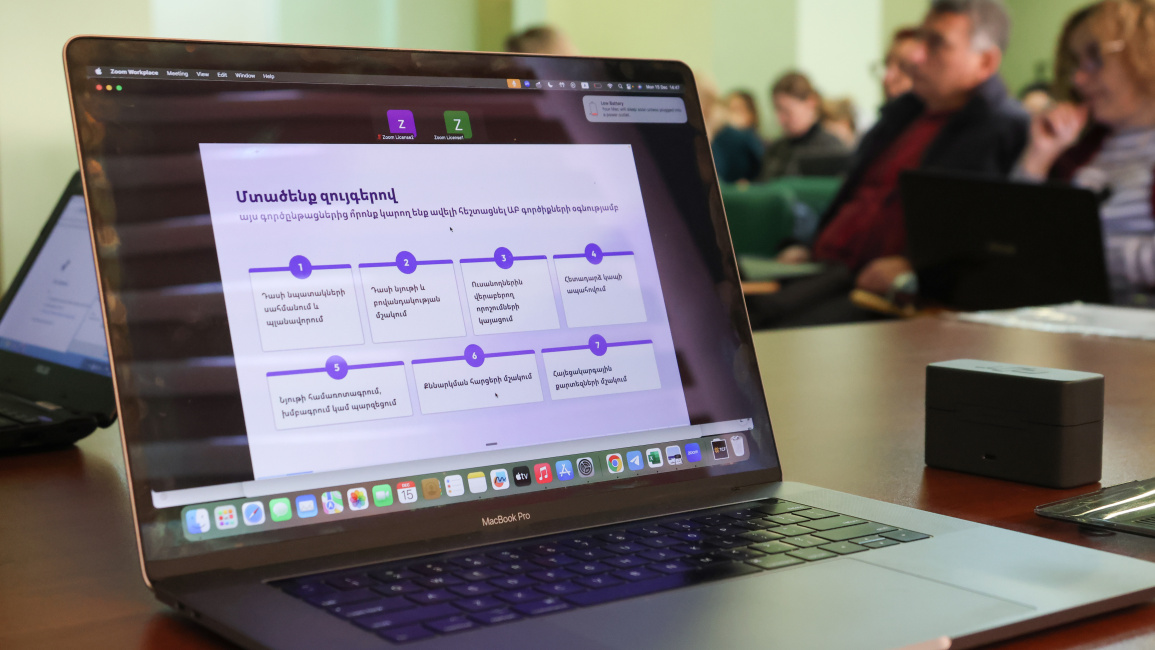
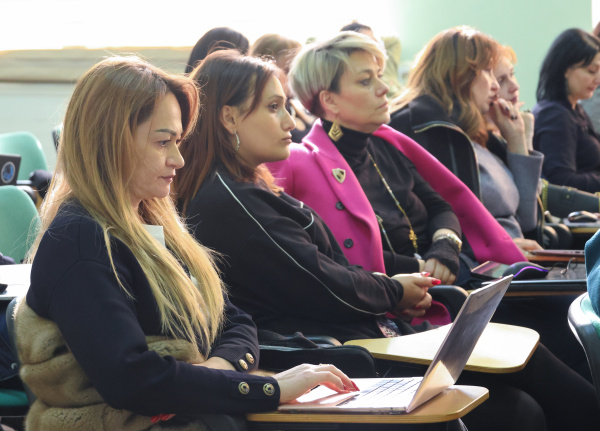
About 80 lecturers from various YSU faculties participated in the course. Participants explored the opportunities of using artificial intelligence in the educational process and gained an understanding of how both they and educational institutions can be prepared for new AI-based learning models. The potential for educational transformation was presented and discussed through personalized learning, simplification of educational content creation, and increased student engagement.
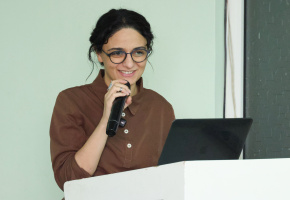
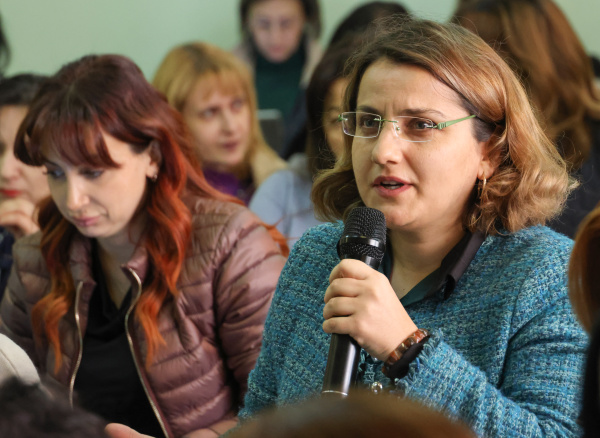
Speaking about the new program, Director of the YSU Continuing Education Center Lusine Kharatyan noted, "The idea for the training arose based on the assessment of lecturers' needs; the majority indicated that they need to develop proficiency in AI tools. Students are already actively using AI tools, so it is important for lecturers not only to recognize and respond to their use but also to apply them correctly in both educational and research processes."
She added that AI tools can significantly reduce lecturers' professional workload, which is one of the objectives of the training.
"The program was developed precisely on the basis of the issues raised by lecturers. Moreover, during the finalization of the training content, the trainers conducted an additional needs assessment to determine the specific areas that required greater emphasis," Lusine Kharatyan emphasized.
Addressing the importance of the program, she added, "Interest in the program exceeded expectations. Just one day after the announcement, 80 participants had already registered, and registration was closed. After that, many lecturers contacted us saying they had not managed to register. Unfortunately, it was not possible to include them in the first group; however, a second session of the course is planned in the near future."
After reviewing the training outcomes and participants' feedback, the Continuing Education Center, in cooperation with the partner organization, is currently revising the program to better align it with lecturers' needs. It is planned that another 80 lecturers will undergo training this year under the improved program.
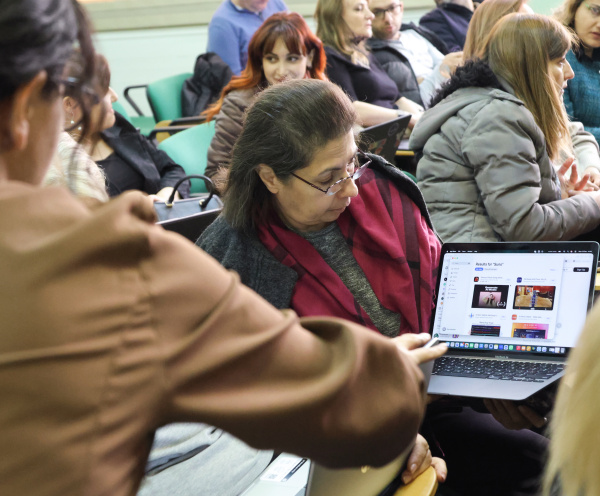
Within the framework of the program, various aspects of using artificial intelligence tools are addressed, ranging from the development of lesson plans and academic curricula to the preparation of presentations and the selection and effective use of appropriate AI tools for research purposes.
"The main focus is on tools that can make teaching easier and increase work efficiency. It is also important to understand which tool is most effective for which purpose and how it should be used," Lusine Kharatyan concluded.
Course participant, Gor Abrahamyan, Candidate of Philological Sciences, Associate Professor at the Chair of Media Studies and Semiotics of the YSU Faculty of Journalism, notes that the course is in high demand, as evidenced by the large number of lecturers who applied to participate in the first phase.
"This comes as no surprise, as the course addresses the areas of using artificial intelligence in both educational and research processes. Expectations were high, and it should be noted that they were largely met," he said.
Gor Abrahamyan noted that the program presented tools that are optional but in fact essential, and that can be used both in organizing the teaching process and in curriculum development, as well as in ensuring effective communication with students.
"From a research perspective, the course was also important. Opportunities for using various academic databases and sources were presented, along with tools that facilitate the process of conducting specific thematic analyses. The selected topics were quite targeted, as a result of which the program can be considered successful," he stressed.
Another course participant, Ani Chakhoyan, an expert at the YSU Scientific and Educational Center for Control and Monitoring of the Quality of Medicines, noted, "Although I was already actively using several artificial intelligence tools in my work, this course opened up new horizons for me. It was rich in content and, most importantly, highly practical. We did not limit ourselves to theoretical knowledge; we also explored specific and relevant tools."
She added that she has already begun applying the knowledge gained during the training in her work, significantly increasing the effectiveness of the educational process.
"In this era of rapid technological development, such courses are simply a necessity. It is important not only to master new tools but also to purposefully employ them in the continuous improvement of the quality of education," Ani Chakhoyan emphasized.